
- Your cart is empty
- Continue shopping
-
Bison Mart
- Posted on
- Categories:Blog
- 0 comments
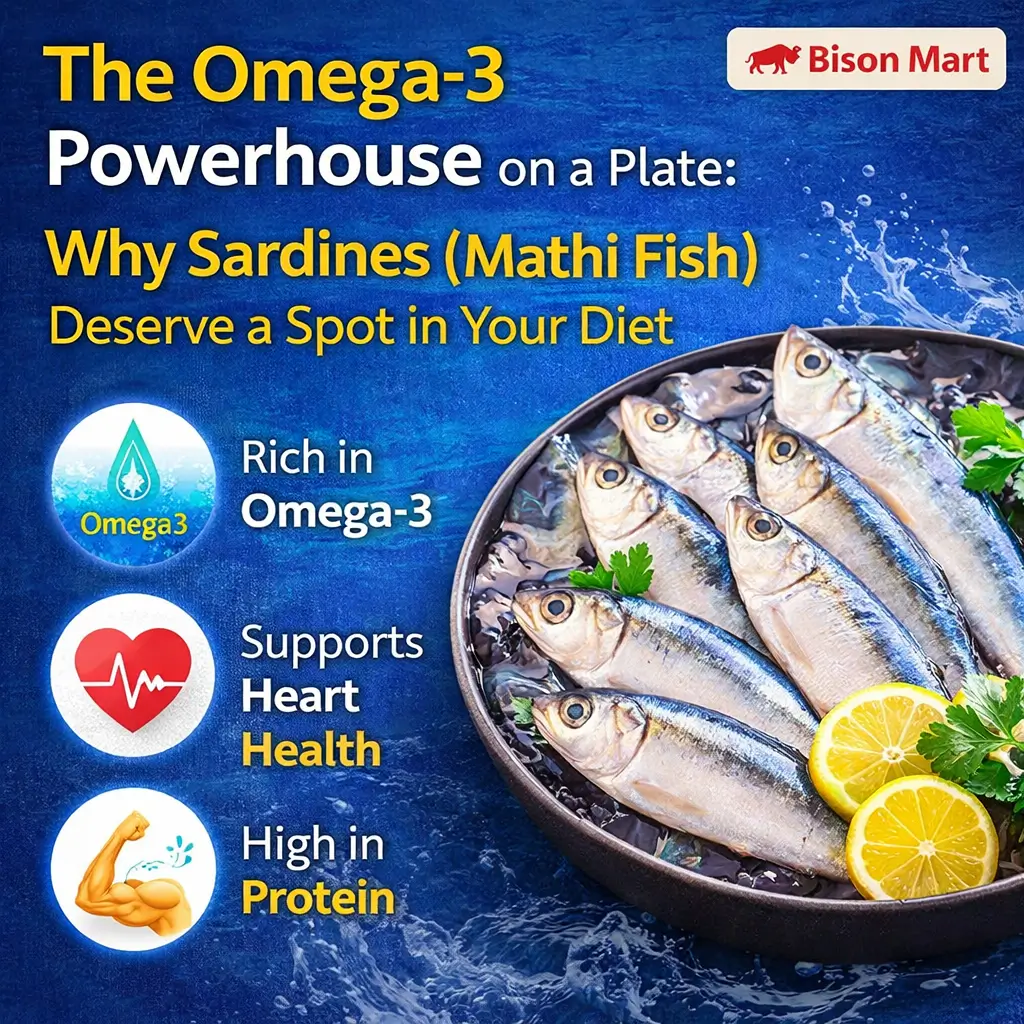
If you’ve ever walked past a tin of sardines and shrugged it off as “just another fish”, it’s time to rethink that judgment. In many coastal cultures—including the Indian sub‑continent—Mathi (the local name for sardines) has been a humble, everyday staple for centuries. What modern science now confirms is that this small, oily fish packs a disproportionate punch of heart‑healthy omega‑3 fatty acids, along with a suite of other nutrients that make it a true superfood.
Below, we dive deep (pun intended) into the nutritional profile of sardines, the specific omega‑3 benefits they provide, and practical ways to bring more Mathi onto your dinner table—without sacrificing flavor or convenience.
1. A Quick Nutrient Snapshot
| Nutrient (per 100 g, cooked) | Amount | % Daily Value* |
| Calories | 208 kcal | — |
| Protein | 25 g | 50 % |
| Total Fat | 11 g | 17 % |
| EPA + DHA (Omega‑3) | 2,200 mg | 138 % |
| Vitamin D | 270 IU | 45 % |
| Vitamin B12 | 8.9 µg | 148 % |
| Calcium (with bones) | 382 mg | 38 % |
| Selenium | 45 µg | 82 % |
| Iron | 2.9 mg | 16 % |
*Based on a 2,000‑calorie diet.
Key take‑aways:
- EPA + DHA (the two most potent marine omega‑3s) far exceed the recommended 1,600 mg/day for adults.
- The tiny, soft bones are fully edible, delivering a calcium boost comparable to a glass of milk.
- Sardines are a rare plant‑free source of vitamin D and B12—nutrients often lacking in many modern diets.
2. Omega‑3 Fatty Acids: What They Do for You
| Health Area | How Omega‑3s Help | Science Snapshot |
| Heart Health | Reduce triglycerides, lower blood pressure, improve arterial flexibility | A 2022 meta‑analysis of 13 RCTs showed a 15 % reduction in major cardiovascular events in participants consuming ≥2 g EPA/DHA daily. |
| Brain & Mood | Build neuronal membranes, modulate neurotransmitters | EPA/DHA levels correlate with better memory scores in older adults; EPA supplementation reduces depressive symptoms in clinical trials. |
| Inflammation | Shift eicosanoid production toward anti‑inflammatory pathways | EPA-derived resolvins actively resolve chronic inflammation—key for arthritis, asthma, and metabolic syndrome. |
| Eye Health | Maintain retinal cell integrity | DHA comprises ~50 % of the polyunsaturated fatty acids in the retina; deficiency linked to age‑related macular degeneration. |
| Pregnancy & Early Development | Supports fetal brain and visual system growth | The American Pregnancy Association recommends 300 mg DHA daily—one 85‑g serving of sardines delivers ~1,900 mg. |
Bottom line: A single serving of sardines can more than cover the daily omega‑3 needs of most adults, translating into measurable benefits across multiple organ systems.
3. Why Sardines (Mathi) Outperform Many Other Fish
- Sustainability – Sardines are pelagic, fast‑reproducing fish, meaning they replenish their populations quickly. Unlike over‑fished species such as bluefin tuna, sardine stocks are generally stable and often harvested using low‑bycatch methods.
- Affordability – A tin of sardines costs a fraction of salmon or mackerel, yet provides comparable—or higher—omega‑3 levels per gram.
- Convenience – Canned, smoked, or fresh, sardines require minimal prep. No filleting or deboning required; the soft bones are edible and nutritional.
- Flavor Profile – Their rich, buttery taste pairs beautifully with both bold (garlic‑lemon) and subtle (herb‑yogurt) seasonings, making them versatile for a range of cuisines—from Portuguese bacalhau à Brás to Indian Mathi Curry.
4. Incorporating Sardines Into Your Daily Menu
| Meal | Idea | Quick Prep (≤10 min) |
| Breakfast | Sardine & avocado toast on whole‑grain bread, sprinkle with lemon zest and chili flakes | 5 min |
| Snack | Sardine salad lettuce cups with diced cucumber, red onion, a drizzle of olive oil & vinegar | 7 min |
| Lunch | Mediterranean sardine quinoa bowl: quinoa, cherry tomatoes, olives, feta, and a handful of sardines | 9 min |
| Dinner | Simple Mathi Curry: sauté onion, ginger, garlic, add tomatoes, spices (turmeric, cumin, coriander), toss in fresh sardines, finish with cilantro | 15 min (including simmer) |
| Side Dish | Sardine pâté: blend sardines, cream cheese, lemon juice, capers; serve with crackers or raw veggies | 5 min |
Pro tip: If you’re new to the flavor, start with milder, smoked sardines and gradually move to fresh, oil‑packed varieties. A squeeze of fresh lemon and a pinch of smoked paprika can instantly tame the “fishy” perception.
5. Frequently Asked Questions
**Q1. Is the high sodium in canned sardines a concern?
A: Many canned varieties are packed in brine, raising sodium levels (~300‑400 mg per 100 g). Choose low‑salt or water‑packed options, or rinse the fish briefly before use to cut sodium by up to 30 %.
**Q2. Can pregnant women safely eat sardines?
A: Absolutely—provided they are sourced from low‑mercury waters (most Atlantic and Pacific sardine stocks are). The EPA/DHA boost supports fetal brain development, and the calcium content aids bone formation.
**Q3. Do vegetarians/vegans have a comparable omega‑3 source?
A: Plant sources like flaxseed or algae‑derived DHA provide ALA or DHA, but the conversion of ALA to EPA/DHA is inefficient (≈5‑10 %). For those avoiding fish, algae supplements are the most direct EPA/DHA alternative.
**Q4. How long do canned sardines keep?
A: Unopened tins can last 3‑5 years if stored in a cool, dry place. Once opened, transfer leftovers to an airtight container and refrigerate—use within 2‑3 days.
6. Takeaway: A Small Fish with Big Impact
- One 85‑g serving = >150 % of the EPA/DHA recommendation.
- Edible bones = +38 % of daily calcium without dairy.
- Low cost + sustainable harvest = a win for your wallet and the planet.
Whether you’re a busy professional looking for a quick lunch, a parent seeking nutrient‑dense meals for growing kids, or a health‑conscious foodie, sardines (Mathi fish) make a compelling case as an everyday omega‑3 champion.
Action step: Pick up a tin of low‑salt sardines on your next grocery run. Toss them onto toast, mix into a salad, or simmer them in a fragrant curry. In just a few minutes, you’ll be feeding your heart, brain, and bones with one of nature’s most efficient nutrient packages.
Because great health doesn’t have to be complicated—sometimes it’s just a little fish on the plate.
References (selected)
- Mozaffarian, D. et al. Omega‑3 fatty acids and cardiovascular disease: effects on risk factors, molecular pathways, and clinical outcomes. J Am Coll Cardiol. 2022.
- Calder, P.C. Omega‑3 fatty acids and inflammatory processes: from molecules to man. Biochem Soc Trans. 2021.
- FAO & WHO. Sustainable Fisheries: The Role of Small Pelagic Species. 2020.